
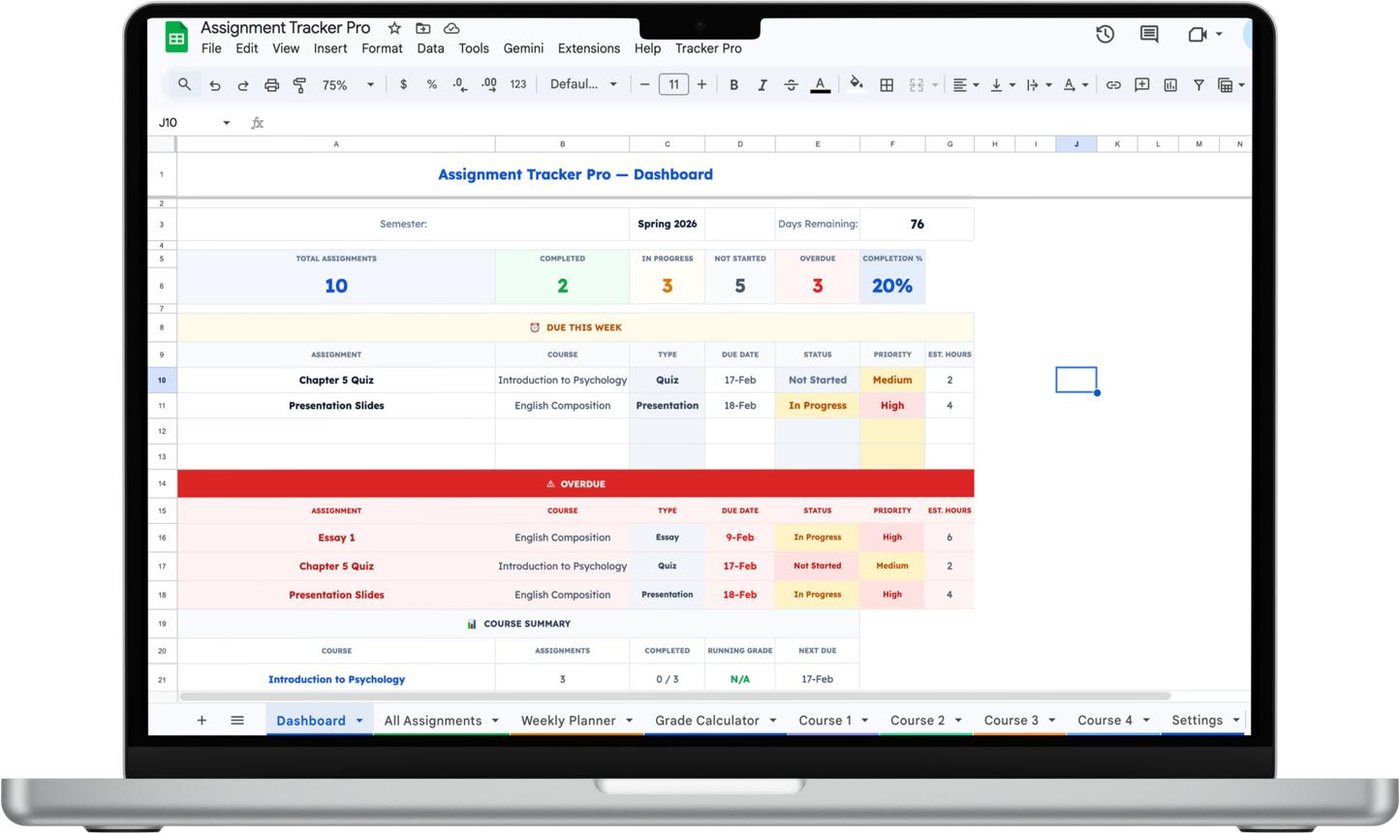
Managing several university assignments can be difficult, especially when different modules have their own deadlines, research requirements and marking criteria. A clear tracking system helps you see what needs attention and decide how to use the time you have.
1. Record every deadline
Start by collecting the deadlines for all your modules. Note the assignment title, submission date, required format and any key instructions in one place. If you’re unsure about a date, check the module handbook or your university’s learning platform.
2. Break each assignment into smaller tasks
A major report might involve reading, note-taking, outlining, drafting, editing and final formatting. Splitting each assignment into smaller tasks makes it easier to see your next action instead of facing one big job.
3. Prioritise upcoming work
Consider both how much work is involved and how much time is left. A short assignment due soon may need immediate attention, while a larger report may need an early start. Review your priorities regularly as things change.
4. Create a weekly plan
Set realistic study periods around your lectures, work and personal commitments. Give each task a time slot and leave some flexibility for the unexpected.
5. Review your progress
At the end of each week, check which tasks are finished, which deadlines are getting closer and what needs to move to the following week. Adjust your plan rather than relying on memory.
6. Use a consistent tracking system
A spreadsheet or planner can help you record deadlines, task status and next actions. The most useful system is the one you’ll keep using.
Final thoughts
Managing deadlines starts with making your workload visible. By recording dates, breaking assignments into smaller steps and reviewing your progress, you can bring more structure to your studies.
StudySprint tip: our Assignment & Deadline Tracker keeps your module dates and task progress in one place.